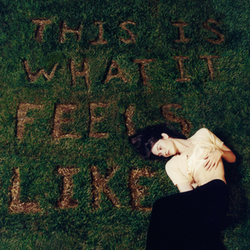
THIS IS WHAT IT FEELS LIKE FIVE YEARS LATER: GRACIE ABRAMS REVIEW
By Kayla Harper
Today, Gracie Abrams has become a household name, headlined arena tours and obtained multiple Billboard hits such as “That’s So True” and “I Love You, I’m Sorry” from her sophomore record, The Secret of Us (2024).
One of the key features of Abrams’ music that got her where she is today is her extremely personable and vulnerable songwriting. Her lyrics feel like entries taken straight from your journal and the sonic delivery of these songs matches that intimacy. The softness of Abrams’ voice is delivered delicately over carefully composed acoustic arrangements creating a comforting atmosphere where every emotion is out in the open.
It’s this very technique that makes the “Close To You” singer’s 2021 EP, This Is What It Feels Like, a collection worth revisiting even five years later. Here’s a deep dive into each song:
1. “Feels Like”
“Feels Like” kicks off This Is What It Feels Like with a heartfelt tribute to Abrams’ best friend, Audrey Hobert. Sonically the track is light and airy, interlaced with feelings of freedom as Abrams’ sings about meeting someone at the right time, “Living in a movie I’ve watched and funny, ’cause you couldn’t have called it / Met you at the right time, this is what it feels like.”
2. “Rockland”
The National’s Aaron Dessner has become a common collaborator on Abrams’ records, but “Rockland” marks their first time working together. Abrams’ reflects on her regrets over how things turned out with a past lover over intricately layered fingerstyle guitar, “who took my place in bed when I left? / Who laughs at everything that you’ve said? / I’m sure that I would like her / If I were slightly nicer.”
3. “For Real This Time”
The pace picks up on “For Real This Time” with a pulsing bass and synthesizer building anticipation as Abrams’ declares her decision to move on from a time, place or person in her life, “’Cause I’ve packed my bags in the middle of the night / A thousand times, I got up to say goodbye / I could be wrong, but I think that I’m for real this time.”
4. “Camden”
The fan favourite piano-ballad, “Camden”, is one of Abrams’ most vulnerable tracks as it dissects various insecurities and struggles, “I never said it, but I know that I can’t picture anything past twenty-five / Not like I care to know the timing, not like I’m looking for that silence.” The track has united many young girls who are still learning how to cope under pressure –and if you’re not a woman: yes it is that serious and that hard.
5. “The Bottom”
Something fascinating about Abrams’ songwriting is her admission of guilt rather than projecting blame onto others and “The Bottom” is an upbeat example of this. Abrams’ sings about how she feels her own problems will weigh on her partner too much and emotionally bring them down with her, “Calling it love, but this isn’t falling / I’m gonna drag you right down to the bottom.”
6. “Wishful Thinking”
“Meet you down at the bottom” cleverly transitions from the previous track (“The Bottom”) into “Wishful Thinking”. The track grapples with an imbalance in Abrams’ relationship with this other person: someone she would do anything for despite them not doing the same for her. Along with the frustratingly pointless hope that they would change, “Dropped it all in a second after your message / Do you remember me calling out? Meet you back in the wreckage, right where you left it / Do you regret how I see you now?”
7. “Older”
“Older” is an interesting song in Abrams’ discography as it seems to lyrically and sonically relate to “Two People” from her debut album Good Riddance (2023). Both songs explore the concept of two people growing apart. In “Older” suggests that overtime Abrams’ and this person became more toxic to each other than supportive, “You’re caught in my crossfire / Fell into my arms, but they got tired.”
8. “Better”
Despite the main hook stating, “If you’re good giving in, giving up, I hope / So if that’s all it was / Hope you feel better now,” it comes across with an ironic tone. On “Better” Abrams sings about a falling-out in which the other person seemed to move on too easily compared to her, ironically wishing them well as if she was the cause of all their problems.
9. “Hard to Sleep”
Another quiet piano ballad, on “Hard To Sleep” Abrams once again delves into a version of herself she doesn’t quite recognize, but has become, suggesting her anxiety and struggles are mostly self-inflicted, “I only thought it for a moment but it’s crippling / I guess the gravity of going out is sinking in / What if I’m missing the capacity for all of it? / This isn’t me, me, me.”
10. “Augusta”
Several songs on This Is What It Feels Like are named after places in Maine including “Rockland”, “Camden” and “Augusta” –which is also a reference to Augustana’s song “Boston”. Displacement and escapism are central themes to “Augusta” as Abrams’ sings of this stagnant mental state, “Feel like maybe I might go to Boston / Cut my hair in the way that I’ve wanted / Change my number and bury my wallet / California makes me exhausted.” The simple, repetitive guitar riff adds to this numbness.
11. “Painkillers”
“Painkillers” feels most reminiscent of Abrams’ first project, Minor (2020), both sonically and lyrically. The track dissects a toxic relationship in which both partners played a role in its unravelling, codependency and a saviour complex, “You represent the codependence / I was down, you wore the shining armor / The side effect is cold resentment.” The simplistic single-note piano instrumental makes the lyrics feel more haunting, like the first night alone following a breakup.
12. “Alright”
This Is What It Feels Like concludes by sampling the calming string arrangement from Jerimih’s “Paradise” (2015), but with a melancholic twist. Abrams’ sings about anything, but paradise, instead she’s completely transparent about the fact that she’s not alright, “I still avoid medication / I’d rather take a vacation / Drive around all of the outlets / Buy things and later regret it.”
Abrams’ second project, This Is What It Feels Like, is a collection of songs that contain the vulnerability she became known for that would connect with so many fans. However, it manifested at a time when Abrams’ felt she was experimenting with different styles and wasn’t sure what she wanted her sound to be yet -–part of why she didn’t want to declare it an official album. Instead, it’s more of a compilation. Like a bunch of journal entries strewn together in a way that makes sense regardless of if they’re meant to coexist or not.

You May Also Like

One Year Of Short n’ Sweet by Sabrina Carpenter
“It’s been five years tonight” and Poppy’s Flux remains one of the best showcases of human perseverance
