Grateful Dead Archivist Dave Lemieux Speaks on the Band’s Life and Legacy
By Kyla Lemieux
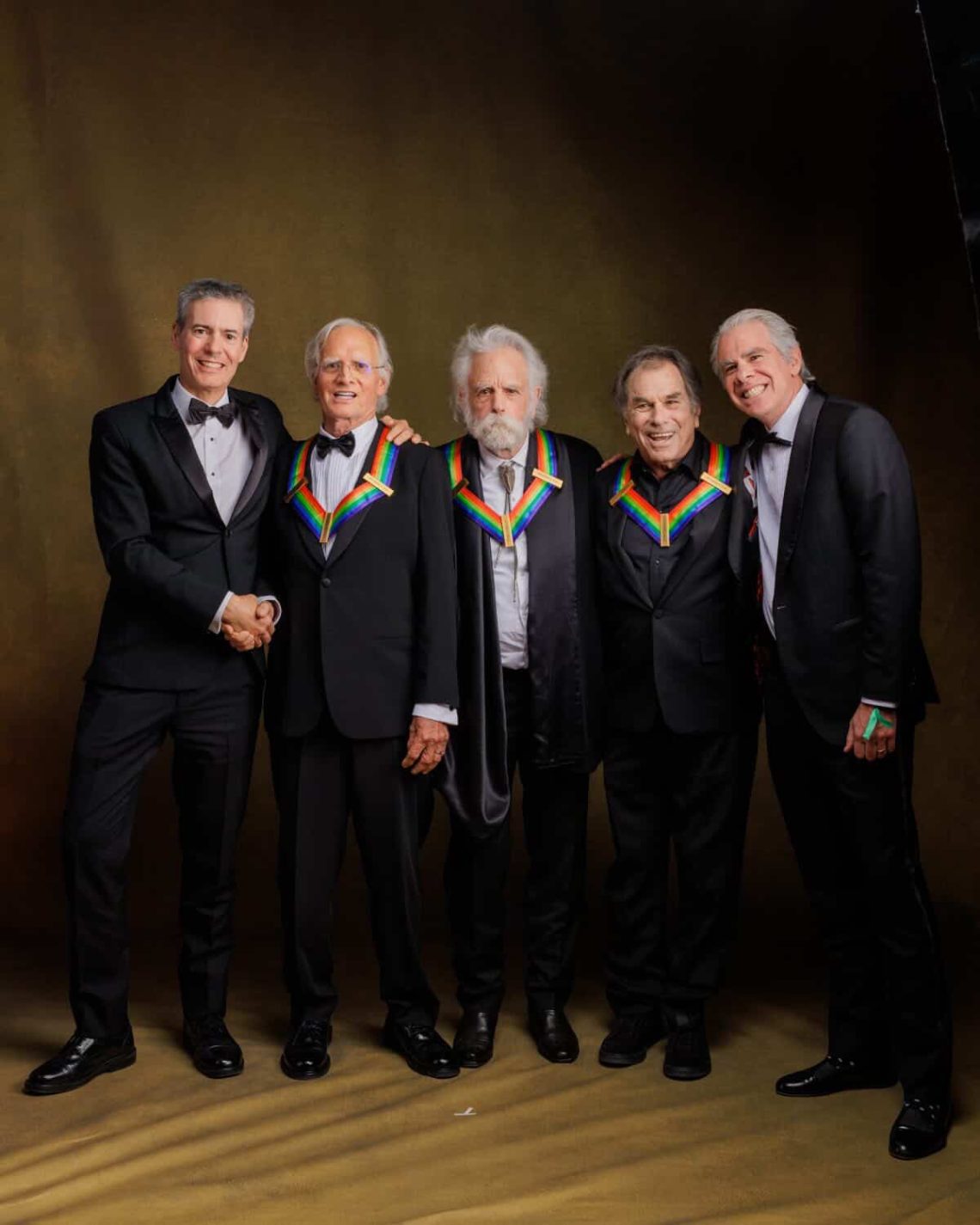
From live concerts to studio albums, films to archival tapes, archivist, producer, and legacy manager Dave Lemieux knows everything there is to know about the Grateful Dead. Though the band stopped performing in the mid-1990s, Lemieux proves that the legacy of the Grateful Dead lives on far beyond their final appearance onstage. For 27 years, Lemieux has had a fundamental role in every archival project the band has put out, from full live albums to countless merchandise licenses. Recently, I got the opportunity to interview him about what his experience with the band has been like.
Kyla: “Please introduce yourself. Tell us what you do, how you got your job, and how long you’ve been working for the band”
Dave: “My name is Dave Lemieux, and I have been working for the Grateful Dead since 1999 as their archivist and legacy manager. I wrote the Grateful Dead’s previous archivist an email back in 1998, asking if I could see the Grateful Dead’s vault, and he invited me to see it. I followed up by saying I could catalog the collection for them. He agreed and invited me down, and he gave me a three month contract to do so. So I went to California in early 1999 to do the cataloging of the video and film collection, and while I was there, sadly, the previous archivist passed away. I was asked to stay and become the Grateful Dead’s full time archivist, which led to becoming their producer and their legacy manager.”
Kyla: “For those who don’t know about the series, describe a bit about what the Dave’s Picks series is.”
Dave: “For well over 30 years, the Grateful Dead have been putting out archival releases of live Grateful Dead concerts on CD and, more recently, vinyl. Originally, going back to 1993, the series was called Dick’s Picks, which was named after my predecessor, Dick Lotvala, who picked the shows up until his passing. In 2012, the Grateful Dead’s record company, Rhino Records, which is a division of Warner Music Group, decided to name the series Dave’s Picks, because I was the one selecting the shows out of the vault and producing these records. The series began in 2012 as Dave’s Picks, and we’re now up to number 58, which is coming out in May of 2026. Each Dave’s Picks is a complete Grateful Dead show from all years of the Grateful Dead’s performing career from 1966 to 1995. They’re 3 CD sets, which is the length of a Grateful Dead concert.”
Kyla: “Out of the 58 Dave’s picks you’ve done, which is your favorite so far and why?”
Dave: “About eight years ago, we released the first Grateful Dead show I attended, from 1987, and it’s a great show. We wouldn’t have released it if it wasn’t a really outstanding Grateful Dead show, but I do have a personal connection to it, and it’s probably one of the ones I listen to the most. I am also a big fan of the couple we’ve done from the Thelma Theater in Los Angeles, 1969. And we recently released one from London, England, which is two shows in 1981. I’m a big fan of that one as well. And I’ve got to say, the one that’s going to become Dave’s picks volume 60 in November is probably one of my favorites as well.”
Kyla: “Before you began working for the Grateful Dead, you followed the band on tour. What was that experience like?”
Dave: “I followed the Grateful Dead on tour from 1987 to 1993. I saw the Grateful Dead 100 times in those years. And I would often see 15 or 20 shows a year. The most I ever saw in a year was 1990. I saw 30 shows that year. I saw them all over the United States, including in California, Oregon, New York, North Carolina, Chicago, and even in Canada five times. I saw them in London, England three times, as well Paris a couple of times. I was doing this when I was 16 years old until I was about 22. It was a safe place to go and my parents knew that.”
Kyla: “What are your thoughts on studio records versus live records? Do you have a preference?”
Dave: “I generally prefer studio records except with the Grateful Dead, although I do truly love the Grateful Dead’s studio output. They made about a little over a dozen records, and they’re really good records, but the Grateful Dead magic happened in the live setting. There’s a reason the Grateful Dead have released almost 300 live records, and there’s a reason that they’ve had over 55 top 40 records that were from the live setting. Their live shows are really what kept people coming back, because every night was different.”
Kyla: “What was the most challenging project you’ve worked on with the Grateful Dead and what was difficult about it?”
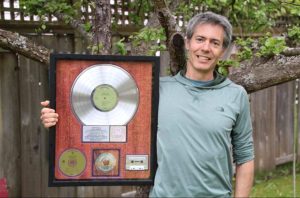
Dave: “I think every project has challenges. I would say the most challenging project, from back in 2004, was the DVD release project of the Grateful Dead movie. It was a movie the Grateful Dead had shot on film in 1974, which they released in 1977. In 2004 we restored the film, and then found a lot of outtakes in the vault and the archive. We color corrected all of the film, and we had about two and a half hours of bonus material from the archive. That project probably took close to 16 months to produce, cost a lot of money, and it ended up going double platinum. To me, it’s the greatest Grateful Dead audio-visual document. We’re very satisfied with how that project came out, and we’ve put it in theaters several times. In 2025, we put it in theaters, and it played in IMAX’s all around the world. It was really cool to see it in IMAX from the restoration that I produced.”
Kyla: “When the Grateful Dead were at the peak of their touring success, the community built at and around the shows was unmatched. What was this like? Do you see anything similar with current music artists during their tours now?”
Dave: “The Grateful Dead community is probably the most important part of the Grateful Dead World, aside from the music. A lot of the friends I still have now are people I met at Grateful Dead shows. I talked to a friend today that I met at a show when I was 16 years old. People who are still some of my best friends, I became friends because of our mutual love of the Grateful Dead. In terms of what I see now, I was fortunate in 2018 to go and see Taylor Swift with my daughter, and I was also fortunate to have driven her to a Taylor Swift show in 2023. I got to see that community up close. It’s the people outside singing, waiting in line together, of course trading bracelets. And I got a very good sense of that. When I was seeing shows, it was well before cell phones and social media. But I see now that younger people are connecting with their music community through social media. A community is being built, and, fortunately, people are still going to concerts and going to meet up in person. My daughter has met some great friends through an online presence that she’s ended up meeting in person because of music.”
Kyla: “Since the band is no longer performing, how would you like the community they’ve built to continue thriving?“
Dave: “Fortunately, there are a lot of great musicians out there still playing Grateful Dead music live. A long time ago, Beethoven was creating music, and he’s been gone for well over 200 years, but still, in any city, you can go see a symphony orchestra play his music. And I think that’s what we’re going to continue seeing with younger bands, playing Grateful Dead music. Then there’s the work we do, to keep the Grateful Dead legacy alive through the archival releases and merchandise. If you want to express yourself as a deadhead, there are many ways to do that. So, I think it’s between the bands that will keep playing Grateful Dead music live, and the archival activities we continue to do.”
Kyla: “What advice would you give to young people who aspire to work behind the scenes in the music industry like you?”
Dave: “I would say get involved. Whether you live in a big city or a small town, there are a lot of ways to get involved in the arts community, and that’s how I got involved in film and audio going way back to my days in Ottawa, in early ’90s. I was taking photography lessons. I was taking film editing seminars. I was working at the independent filmmakers cooperative of Ottawa. It’s really all about putting yourself out there with emails, letters, networking, meeting people, letting people know that you’re interested in helping out in any way. When I started working for the Grateful Dead, I was archiving and producing, but I was also taking out the trash and fulfilling the band members’ lunch orders when they were in the studio working. I was doing all these things that had nothing to do with archiving or producing, but it’s important to just let people know that you just want to be involved, and you want to help out in any way.”
Kyla: “Finally, what is your favorite Grateful Dead Studio album and your favorite Grateful Dead song?”
Dave: “This is a tough one. But I would say Working Man’s Dead and American Beauty. Those are two albums that came out in 1970, and they came out back to back. For my favourite Grateful Dead song…can I give you 10? I love a song called “The Other One.” I love “Estimated Profit.” I love “Eyes of the World,” and more recently, I’ve loved “Wharf Rat.” It is a song that, in the last decade or so, has really pretty consistently been in my top five. So I think those four are my favourites. When I get asked what my top 10 are, it’s a rotating list of about 30 songs. I love them all. There’s not a Grateful Dead song I ever skip, because even the most straightforward song, the song they might have played 400 times when they played live, is played differently every single night. I might find something really unique in every version. So, I love them all, but those are some of my favorites.”

You May Also Like
Phoebe Bridgers “ICU” Lyrical Analysis
The Breakthrough “Goldstar Girl:” Taylor Bickett on her Debut Album, the Music Industry, and “A Lot of the Little Things”