
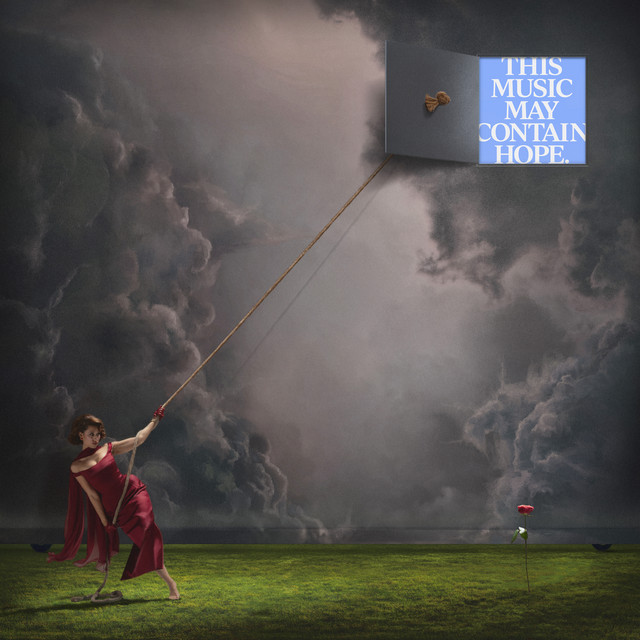
This Album Contains 17 Hits: Raye’s New Album, Broken Up by Season
By Kyla Lemieux
Roughly a year ago, Raye was hardly a household name. Now, upon the release of her sophomore album, This Music May Contain Hope. (March 27, 2026), she has become an artist that just about everyone knows. With a sold-out UK arena tour, a US theatre tour, and an upcoming run of stadium shows supporting Bruno Mars, Raye has her biggest year yet ahead of her. With a constant string of television specials and award show performances, she seems to be living the life that every star dreams of.
However things haven’t always been this easy for the singer, before the release of her debut album, My 21st Century Blues. (February 3, 2023), Raye endured a nearly decade-long battle with her former record company, whose plans for her career did not match up with her own, resulting in her inability to release the type of music she wished until she eventually broke free as an independent artist. H
Raye’s struggles in the industry are far from the only hardships she’s been through in recent years as is evident in the lyrics of numerous tracks on her new album. Raye’s battles with her own mental health have been a constant burden in her life. Though she sings about her struggles with depression and anxiety, her new songs also bring a fresh concept to the table: hope. Laced throughout the lyrics are messages of optimism, perseverance, and the act of renewal. Uniquely, the album is sonically split into four sections, each representing a different season. Through powerful vocals, inspiring lyrics, and Raye’s signature musical build-ups, This Music May Contain Hope. tells the beautiful story of how overcoming struggles can help you discover your true self.
Autumn
In true Raye fashion, the album begins with a spoken-word prelude, entitled “Intro: Girl Under The Grey Cloud.” While verbal introductions can sometimes feel unnecessary, this track feels like the perfect way of setting the scene for the story that unfolds throughout the album. Filled with theatrical music and visual descriptors, we learn of the story’s setting, as well as the deteriorating emotions of the “girl under the grey cloud,” who will become the album’s main character.
The mixture of emotional attributes (“loneliness”, “disappointment”, “desperateness”) and perceptible characteristics (“rain”, “thunder”, “the scratching of the zip on the left hem of her dress”) makes us feel like we’ve been thrown right into the scene ourselves. Once the introduction concludes, the story truly begins.
Track two, titled “I Will Overcome.”, is the perfect way to pull us in. Similarly to many of Raye’s most iconic songs, it starts off relatively soft, then quickly builds up into a powerful anthem. Its lyrics dance between grief and hope, containing haunting lines such as “in a reflection of a Chanel boutique window I can see the old me and I hate her,” but also words of hopeful positivity, including “I’m not okay right now, but I’ll get there somehow.” Another lyric that is definitely of note is her statement of “some people say I remind them of Amy,” which addresses the constant comparisons made between Raye and the late British musician Amy Winehouse. Throughout this track, the impressive vocals are as much of a highlight as the lyrics themself.
The deep emotions of “I Will Overcome.” are a complimentary contrast to the album’s next track, “Beware.. The South London Lover Boy.” A more upbeat song, this is once again a perfect example of Raye’s storytelling abilities. Written with a comical twist, the lyrics tell of the “dangerous” men in South London, who will “pull up on you in an all-black car” but are “not looking for your heart, just your pillow to rest his head.” Reminiscent of the album’s lead single, “WHERE IS MY HUSBAND!”, this track is a fun, catchy recess from some of the heavier songs on the album.
The topic of unsatisfactory men travels on to track four, “The WhatsApp Shakespeare.”, which tells the predictable tale of a man who never lives up to his online persona. Both a vocal and lyrical highlight of the album, the mood mixes sadness with humour, with Raye overdramatising the song’s contents to bring a more fun twist on a troublesome situation. Calling him a “cursive kisser,” Raye sings of the dangerous ways of the “WhatsApp Shakespeare killer,” who’s known to “WhatsApp call” his lovers before they discover just how many other women he’s simultaneously leading on. With this track, the “Autumn” segment of the album concludes, bringing us to the coldest season.
Winter
The second season of the album begins with another compelling number entitled “Winter Woman.” As with many of the album’s tracks, it once again ties the feelings of sadness with those of hope, and a longing for the somewhat inevitable “warmer days to come.” The sensation of numbness is laced throughout the song, with the lyric “life goes on” repeated throughout, representing the concept of moving through life, even when its purpose is not yet clear. This song is the first quarter of an absolutely flawless four-track-run, in which the three songs seem as though they are multiple parts of the same chapter.
The second section, “Click Clack Symphony. (feat. Hans Zimmer)” became the album’s third single, released just a week before the album itself. It tells of Raye’s struggles with leaving her home due to her mental health difficulties, which leads her to call up her friends in search of a distraction from her sadness. A perfect song for all the stiletto lovers out there, “Click Clack Symphony” relies on the “empowering” sound of high heels clicking on hard floors, which is a reminder that “it’s going to be alright.” The song’s vocals are completely enthralling, but my personal highlight of the track may be the spoken-word poem integrated within the music. These lines, such as “the cold never lasts, my darling, it just teaches the heart how to burn,” feel like reassurance for any listeners who are facing struggles of their own. The goosebump-inducing orchestral segment at the end is the perfect way of closing the nearly six minute track.
Next up, we are brought to “I Know You’re Hurting.” a song that was already well-known by the Raye fandom, despite the fact that it was only just released. As is evident by the title, this track is about seeing and understanding peoples’ struggles, even when they are trying to hide it. One of the most vocally stunning pieces on the album, this song once again passes the six-minute mark, filled with lyrics of empathy, such as “I said a prayer for you, I hope it’s working. Please, my dear, don’t stop believing in miracles.” The end of the song contains the repetition of the line “it’s gonna be okay,” as though this song is once again meant as a reassurance to listeners.
The Winter section of the album is now completed with one final track, “Life Boat.” Though this track is somewhat shorter and more simpler than the others on the album, its message still hits just as hard. Another track containing spoken-word components, “Life Boat.” repeats the line “I’m not giving up yet” again and again until it feels no longer like mere words and instead like a true message of hope. With this, we are brought to the Spring section of the album, where more upbeat songs are brought into the rotation.
Spring
Track nine, “I Hate The Way I Look Today.,” has a dark message hidden behind cheery music. In this track, Raye gives us a deeper view into her personal insecurities surrounding her body, which are previously mentioned in her track “Body Dismorphia.” (My 21st Century Blues, 2023). Though the song itself is a buoyant, jazzy piece, the lyrics tell a different story. “I looked into the mirror and cried, I do detest my wicked mind,” Raye sings, all the while keeping tempo with the perky saxophone melody behind her vocals.
In signature Raye fashion, she ties this track into the next, despite the clear difference in subject matter. “Goodbye Henry. (feat. Al Green)” opens with a line that perfectly describes itself and the previous track: “this is a sad song, though it feels happy.” After the quick intro, Raye begins to tell yet another story, this time of a man she loved in spite of the fact that she had to leave him. As promised by the intro, the cheerful music is a stark contrast to the lyrics, which tell of her heartbreak on that “devastating day” when she and “Henry” “dried each other’s tears.” Completed with a verse sung by American singer, songwriter and producer Al Green, this track is a definite highlight for me.
The next track, “Nightengale Lane.,” feels like a continuation of this storyline, as it is once again about a similar heartbreak. As the album’s second single, this song makes for the perfect soulful anthem about a past love, and the fear of never finding the same type of love again. It is the only slower song in the Spring section of the album, but its gorgeous lyrics and vocals make it anything but a downgrade in quality. Raye starts off the song by singing about her “first love kissing her goodbye,” but later delves deeper into her hopes of someone loving her again one day. This song also holds many visual aspects, as she sings about specific locations such as “Old Park Avenue” in “Early June.”
The track concludes with an epic vocal finale, which brings us to the final “Spring” song. “Skin & Bones.” may be my personal favourite on the album. Here, Raye sings about how her “standards are too low,” as she prepares to go out with a man who “texts to cancel plans.” Another very 70s-inspired track, “Skin & Bones.” is a definite dance song, with strong aspects of disco mixed in as well. Though the song is somewhat shorter than many of the others on the album, that does not detract from the overall quality of the song at all. The sunny feeling of this track makes for the perfect transition into the album’s final season.
Summer
The last section of the album is opened with the lead single, “WHERE IS MY HUSBAND!” Released over six months before the album’s release, this track provided the perfect initial glimpse into the contents of the album. As one of the album’s most upbeat songs, the fast paced singing on “WHERE IS MY HUSBAND!” is nearly impossible to keep up with. Once again reminiscent of 1960’s soul, the dramatic horns paired with Raye’s breathtaking vocals sets this song apart from the other quicker tracks on the album. Again on the topic of searching for a lover, Raye sings about how her future husband must “need her completely,” as she wonders, “is he far away? Is he okay?” As the perfect opening to the Summer section, the conclusion of “WHERE IS MY HUSBAND!” makes way for another more mellow track, this time one about her family relationships.
“Fields. (feat Grandad Michael)” features Raye’s grandfather and is filled with sorrowful lyrics about Raye’s regrets of not putting that relationship as more of a priority in her life. She sings about being sorry for not calling for “so many months” and opens up the song to ask about how he’s doing. Her grandfather, who is also a very musical person, tells her that “not a day goes by” where she isn’t on his mind. When the track ends, we find that it is not the only one on the album that includes the featuring of one of Raye’s family members, as the next, entitled “Joy. (feat. Amma and Absolutely)” includes vocals sung by both of Raye’s sisters.
Another personal highlight on the album, this song holds exactly what is promised by the title: joy. The aspect of a choir in this song makes it feel almost like an old gospel piece, which Raye has taken and modernised to fit her personality. With optimism seeping through every line, Raye sings, “I may cry through the night, but my joy comes in the morning.” Though the song falls below five minutes, which is on the shorter side for this album, Raye makes sure to let each of her sisters sing an entire verse. Those who have already attended Raye’s current tour, “This Tour May Contain New Music,” say that this song is extra powerful live, as Amma and Absolutely (who are the tour’s openers) come out and perform it alongside Raye each night. “Joy.” feels like a great way to begin the process of wrapping up the album, which brings us to the final full song, “Happier Times Ahead.”
This track brings us back to the original concepts of the album, which we heard in the very first songs. It once again holds onto messages like “it can’t rain forever,” with positivity laced through its lyrics and melody. It’s an upbeat ballad, building throughout the song, ending on a truly joyful note. Filled with Raye’s abstract but intentional vocalising, the song is reminiscent of the 1920s track “Happy Days are Here Again”, made even more famous by Judy Garland and Barbra Streisand in the late 1960s. With this, the album is almost brought to a close.
The final track, “Fin.” is titled the same as the concluding track on Raye’s debut album, but this second “Fin.” track is much longer than the first. Though it is mostly used to roll the credits of the album, the intro to the song still holds music, ending the album on the note of “hope always existing above the clouds.” With this, the album is brought to a satisfying close, and we are left considering the many messages Raye introduced to us throughout the 17 tracks.

You May Also Like

Wuthering Heights: How Charli XCX’s New Album Brought Storytelling to the Next Level

Is Reneé Rapp Pop’s Next Big Sensation? Read About Her New Album ‘BITE ME’